program reply(email: text) -> text {
budget { max_agent_calls: 2 }
let intent = decide"What does this email need?"using email
aschoice {
help: "Help with a problem",
sales: "Information before buying",
other: "Anything else"
}
let task = match intent.value {
help => "Draft a helpful support reply.",
sales => "Draft a concise sales reply.",
other => "Draft a clarifying question."
}
returngenerate task using email
}
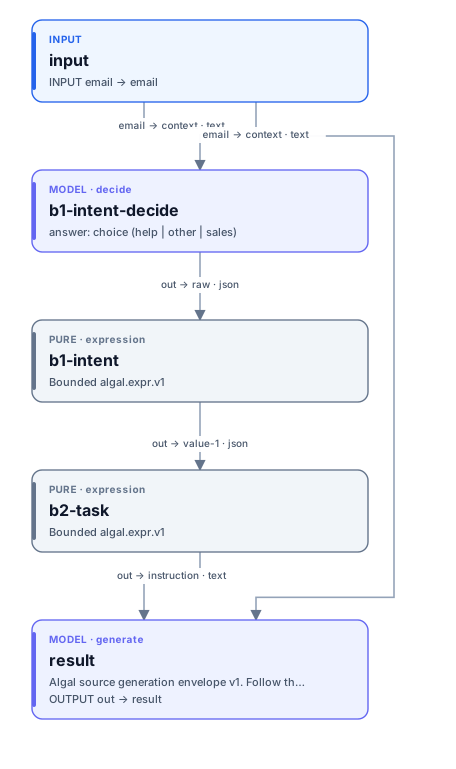
A decision. A pure match. A draft. The model sees the context you declare. The program makes the limits visible.
2 executor attempts, at most0 model calls in match
Generated from the compiled manifest, including the pure decision adapter. Arrows are data dependencies.
Executable source, not pseudocode. The Bun compiler lowers .algal into the existing algal.organism.v1 format. Both runtimes execute the compiled manifest.
One executable meaning
Read it. Run it. Ask what happened.
A diagram comes from the program. An execution overlay comes from its receipt. The views stay connected to the artifact they explain.
01
Write a program
Immutable values, explicit model effects, exhaustive choices, and declared budgets.
.algal source
02
Compile its structure
A deterministic compiler produces a typed manifest and a source-map sidecar. Diagrams come from that manifest.
.algal.json + diagram
03
Keep the evidence
Receipts record execution. Replay checks the orchestration against recorded external answers.
receipt + verification
Replay checks execution consistency. It does not establish that a model answer is true or attest that a provider performed an operation.
The same core, more ambitious programs
Start small. Grow deliberately.
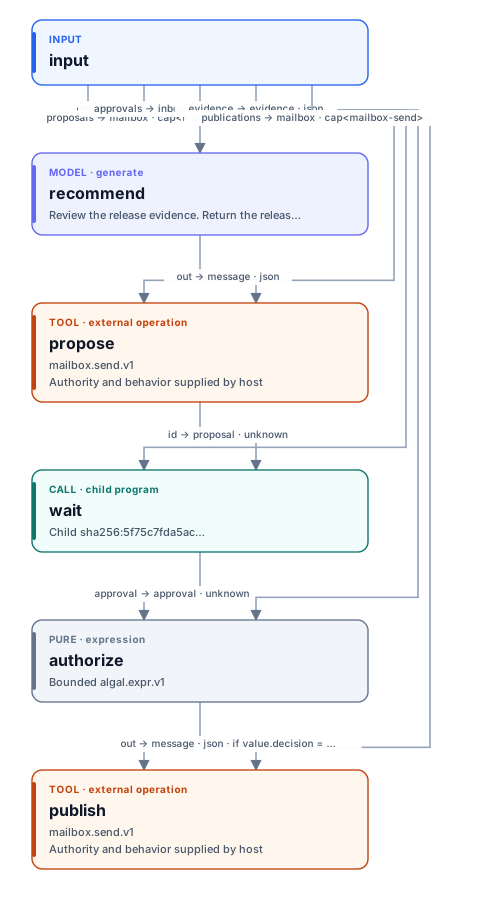
Refine a draft. Suspend for approval. Apply a child program to a collection. Propose a new program. Every effect and boundary has a place in the graph.
Bounded refinement
Improve it. Check it. Know when to stop.
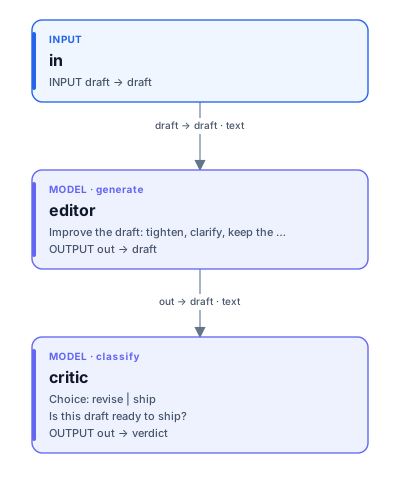
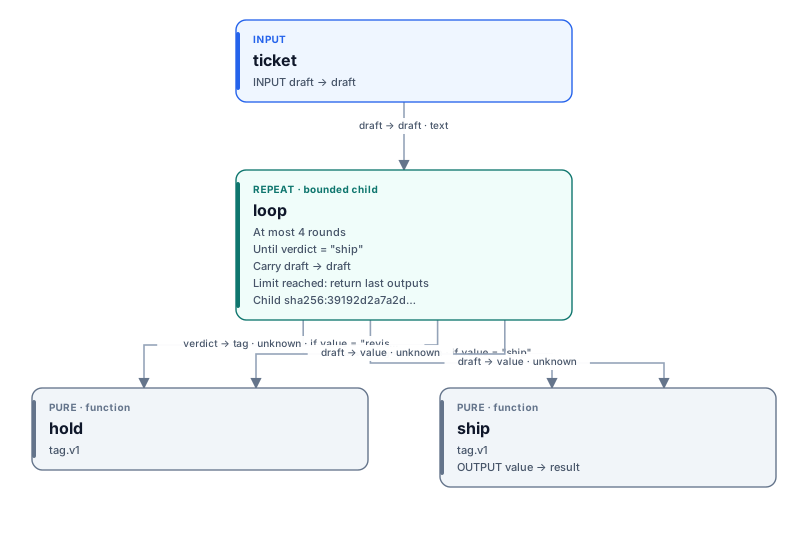
An editor rewrites a draft. A critic returns ship or revise. A repeat cell carries the draft into the next round, up to 4 rounds.
The final verdict still matters. Reaching the round limit returns the last outputs; it does not turn revise into success. The graph sends that result to hold.
The boundary is part of the program4 rounds maximum
Each round contains an editor and a critic. The parent's attempt budget also bounds nested execution.
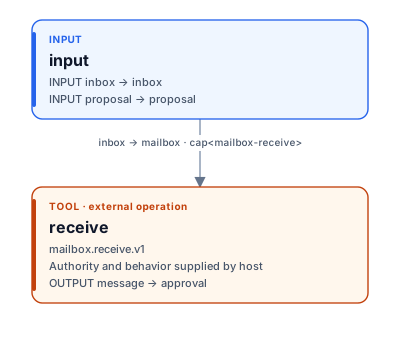
Data dependencies retain the order. Mailbox capabilities are admitted by the host.
Bounded composition
One useful program. A collection of questions.
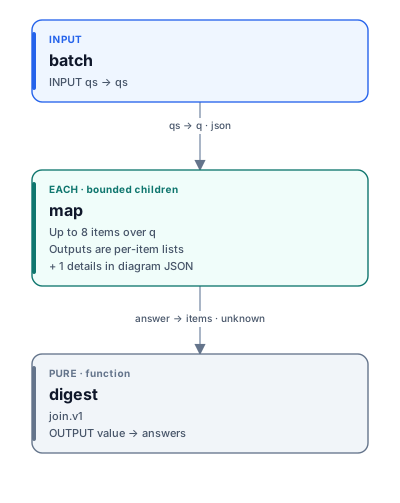
The each cell applies a pinned child program to each question, up to 8 items. A pure function joins the answers.
The child's interface makes it reusable. Its content digest fixes which program is being called. The parent bounds how much work the collection can create.
Fan-out is explicit structure8 items maximum
Independent work is visible in the graph. This does not promise concurrent execution or a wall-clock speedup.
A reusable child is an artifact with a declared interface, not an invisible prompt template.
Programs as values
A program can propose its successor.
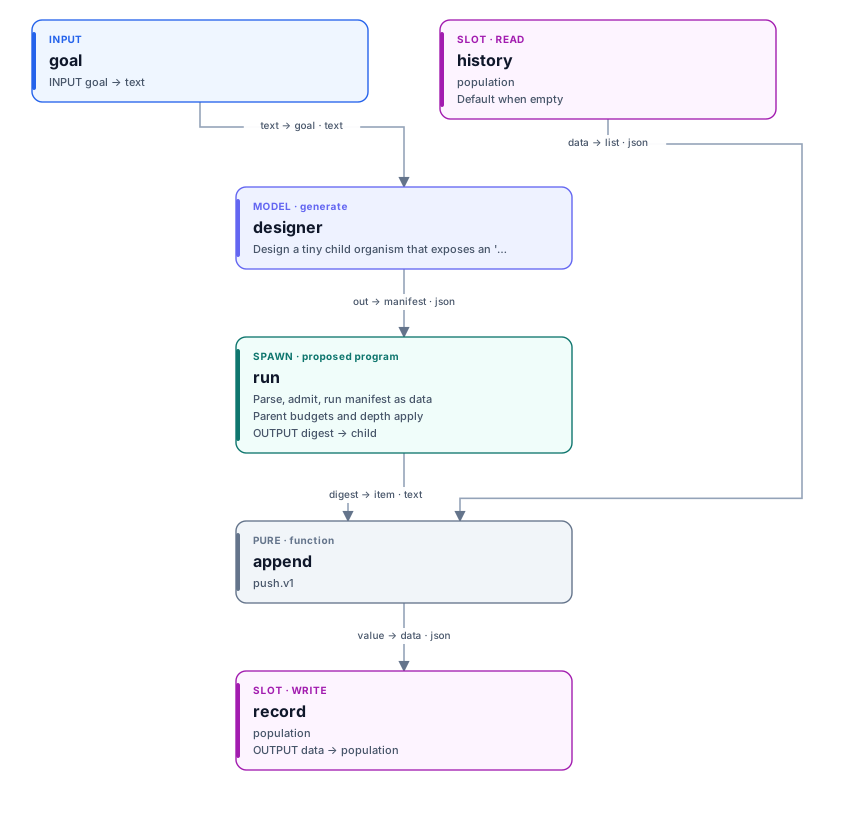
A designer produces a child manifest as data. A bounded spawn operation admits and runs it, and its digest is appended to a persistent population slot.
That is the starting point for a habitat. Foundry and civilization workflows evaluate candidates on declared cases; host selection decides what to retain or promote.
Proposal is not promotionInspect → evaluate → select
The graph shown records a proposed child's digest. It does not itself prove improvement or promote a winner.
Execution explains what a program did. Evaluation and lineage explain why a version was retained.
These are generated views of existing executable manifests. The first source-language release covers values, decisions, generation, and pure selection; composition, waits, and evolution remain available through the manifest API.
From one program to a measured population
Growth needs a selection rule.
Better programs come from evidence. Keep the candidate, its evaluation, and the host's decision connected—so growth has a history you can inspect.
01 / proposeCandidate artifacts
Model-produced plans or manifests
02 / admitTyped, bounded programs
Host compilation and checks
03 / measureEvaluation evidence
Declared cases and work limits
04 / selectRetain or promote
Host policy and recorded lineage
Conceptual lifecycle of the existing foundry and civilization workflows. This is not a recorded run or a promise that a candidate improves.
Start with a real artifact
Twenty lines. A graph you can inspect.
Clone the repository and use Bun 1.3 or newer. Compile the source, check its graph, and export the diagram. No model credentials are needed for these steps.
# Install from the repository root
bun install --frozen-lockfile

# Compile readable source
bun cli.ts compile examples/source/reply.algal \
  --out reply.algal.json \
  --source-map reply.source-map.json

# Check it and export its structure
bun cli.ts check examples/source/reply.algal
bun cli.ts diagram examples/source/reply.algal \
  --format svg --out reply.svg
The compiler emits the existing manifest contract. Model execution uses an explicitly configured executor or scripted responses.
01
Pure core, explicit effects
Immutable values and deterministic expressions carry the structure. Models, tools, and durable state have visible boundaries.
02
Bounds before execution
Programs declare limits. The host owns admitted functions, providers, tools, and capabilities. A manifest grants no OS isolation.
03
Evidence you can inspect
Content-addressed programs and receipts connect source, structure, and execution. Measure quality on the workload that matters.